
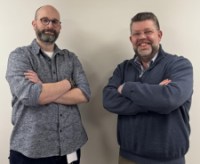
NB: How did your professional partnership originate, and what complementary strengths have enabled you to build multiple ventures together successfully?
Dave (King) and I had both built and exited businesses before we worked together. I previously founded and scaled a consultancy, Univate, which I later sold, and Dave had built several ventures of his own. When we came together at Differentis, it wasn't simply as colleagues. It was two entrepreneurs who recognised complementary strengths.
Differentis [1] was delivering strong client work, but like many growing consultancies, it had been built by consultants rather than operators. I was brought in to build the operational engine beneath the commercial success - introducing financial controls, governance, risk management, technology, people processes, and accreditations that would make the business scalable and resilient.
Dave is naturally vision-led. He's exceptional at positioning, strategy and turning complexity into commercial clarity. My strength sits in architecture, building the systems and structures that make growth safe. If Dave sets direction, I build and maintain the engine.
That dynamic has been translated across ventures. From consultancy to consumer retail, the formula remains the same: strategic clarity paired with disciplined operations. What makes it work is trust, challenge, and shared entrepreneurial experience. We've both navigated growth pain before - and we're comfortable pressure-testing each other's thinking.
NB: With Differentis, you introduced the concept of an "intelligent consultancy." What market inefficiencies were you addressing?
Traditional consultancies often deploy standard frameworks delivered by junior teams, regardless of whether they genuinely fit the organisation in front of them. The result can be complexity where it isn't needed and strategy decks that never embed.
Our belief at Differentis was simple: they sell frameworks; we fix businesses.
We invested time in deeply understanding each organisation's context, culture, and objectives before designing solutions. We remained boutique and outcome-driven, deploying senior specialists and owning delivery end to end. If something didn't work, we would fix it. That accountability was a major differentiator.
Time and again, we were brought into projects previously delivered by larger firms that had over-engineered solutions or misunderstood client reality. Intelligent Transformation meant applying real human intelligence, supported by systems, thinking, and technology - not generic playbooks. Clients achieved tangible change, not just documentation.
NB: Scrannery marked a move into consumer brand development. What did operating a product-led business teach you about scalability?
Scrannery [2] began almost accidentally. Dave and I used the same Sheffield coffee site, and when the operator collapsed overnight, a conversation about "why don't we run it?" became serious.
Neither of us came from catering backgrounds, but we understood how to build businesses. We launched from scratch - sourcing machines, fitting out units, building supply chains, and funding everything as we went.
Running a physical consumer business was eye-opening. Supplier management, VAT, staffing rotas, compliance, and cash flow timing became daily operational realities. There were moments where payroll and supplier payments collided with limited cash in the bank, and even last-minute equipment withdrawal days before opening.
Scrannery reinforced a critical lesson: growth without structure becomes fragile. Early ways of working rarely survive scale. Governance, supply chains, systems, and leadership capacity must be built earlier than founders expect.
NB: What key inflection points most influenced your perspective on business growth?
At Differentis, the inflection point came when growth demanded inward-facing roles - finance, operations, governance, and people - rather than purely revenue-generating hires. Many businesses delay those appointments because they don't immediately drive income. But without them, leadership becomes trapped in firefighting.
At Scrannery, scaling exposed operational inefficiencies quickly. We initially supported multiple local suppliers, but growth required consolidation into streamlined national supply chains while still maintaining ethical partnerships where it mattered.
Across ventures, the pattern is consistent: as organisations grow, professionalism, structure, and credibility become non-negotiable. Larger clients and partners expect robust systems and governance. Without those foundations, growth, becomes exhausting rather than exciting.
NB: With the launch of Integritis, what specific challenges facing ambitious SMEs are you aiming to solve?
Most growing businesses face similar challenges. Financial visibility deteriorates. Hiring becomes reactive. Compliance is overlooked until it becomes urgent. Founders find themselves drowning in operational work.
Many attempt to fix this through fragmented outsourcing or premature hires that don't quite fit. That creates cost leakage and inconsistent standards.
Integritis [3] provides Business Operations as a Service - integrating finance, assurance, people, technology, and governance under one accountable partner. We become the silent running engine of the business, handling operational complexity so leaders can focus on customers, growth, and strategy.
If you started a company to design products or deliver services, you didn't intend to become a finance director, HR lead, and compliance officer. We remove that burden while building scalable foundations.
NB: What structural or leadership gaps most commonly prevent businesses from scaling effectively?
Leadership bottlenecks are common. Founders struggle to delegate and inadvertently become constraints on growth. Others require specialist support, but only fractionally, making full internal hires impractical.
Compliance, risk, and governance are often delayed because they don't feel urgent - until something goes wrong. Yet these areas protect reputation and long-term viability.
By integrating operational functions under one partner, businesses gain capability without the cost and complexity of building full internal teams. Systems become joined-up, accountability is clear, and leadership is freed from wearing multiple hats.
Importantly, Integritis operates as a social enterprise. Through the Integritis Foundation, we reinvest into veteran resettlement and skills development, helping capable individuals transition into consultancy careers. For us, business should not only succeed financially but create meaningful social value.
Building profitable companies is rewarding. Building businesses that do genuine good is what makes it sustainable.
For further information visit Integritis [4]