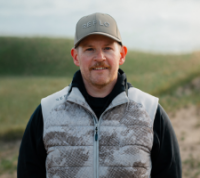
You've been friends with Peter since childhood, did you have a collaborative business relationship pre Reflo?
No, Pete and I never had an official business together before Reflo. We're best mates from school, and we were always entrepreneurial as kids, the usual stuff like a dog walking business, selling chocolates in the playground that we'd bought from the cash and carry, right through to bigger hustles like importing iPhones into the UK before they were available here, and running a BlackBerry unlocking website. None of it was ever a proper business though, just Pete and I messing about with ideas.
So no, we'd never actually worked directly together before launching Reflo. What's been brilliant is discovering we have matching but complementary skill sets, rather than thinking the same way. Pete's our CEO and he's very analytical and data driven, he's at his best with a spreadsheet in front of him. I'm more creative. There's a running joke in the business: if you want Pete to sign something off, send it to him as a spreadsheet. If it's already signed off, send it to him as a PDF with beautiful pictures in it. There's real truth in that. We think in aligned ways about where we want to get to, but we get there very differently. That's turned out to be a real strength, and honestly it's something we never realised growing up as mates, just how differently our brains actually work.
What originally inspired you to enter the highly competitive sportswear market?
It actually came out of our own day jobs. Pete was working for a company that made drinking water in plastic bottles, and he had this juxtaposition in his head: the better he was doing at his job, the more single use plastic was getting created. I was working for a startup called the Icon Series, a team match play golf series featuring some of the biggest names in sport, players like Harry Kane, Canelo, Michael Phelps. Through that event, I kept thinking there was an opportunity to get those players out in apparel, my creating a team kit like there is the Ryder Cup.
Things came to a head for Pete when three container loads of his company's water got held up over a labelling issue. The local distributor said there were only two options: incinerator or landfill. Pete wasn't happy with either, he's always been driven by sustainability, same as me, so he went looking for a company that could take the waste plastic instead. When he asked what they'd do with it, they said they'd turn it into performance fabrics. That got him thinking.
The two ideas came together from there. The initial thought was a golf brand made from recycled waste. Pete's not as into golf as I am though, so he pushed for something broader, a performance wear brand covering training too, not just golf. That was the early thinking.
Then came the sustainability research. We quickly learned fashion is the second or third most polluting industry in the world, responsible for around ten percent of global carbon emissions. We realised there was a real opportunity to help fix an industry that's fundamentally broken, and how do we do things better became our guiding principle from day one.
So the idea came from two individual experiences in our own day jobs, combined with our shared passions. It took around two years from that initial idea to actually launching, and we're still pushing on that same question today: how do we do things better, and how do we leave as little impact as possible.
How long did it take before you had a product that fulfilled all your aims regarding sustainability and quality?
Around two years in total. The first six months were purely research and ideation, before we'd even started designing product. We had to define exactly what we wanted the product to stand for, what it should look like, and get our guiding principles and philosophy right first.
Then we moved into product design and fabrics, and that's where it got hard. We quickly realised most sustainable fabrics weren't up to the standard we expected, and we got that same feedback from people we spoke to early on. Tell someone you're making a sustainable brand and the reaction is often "sustainable fabrics are a bit itchy, they don't moisture wick well, they get sweaty." So we spent a huge amount of time researching what actually makes a fabric perform, then working out how to achieve that using recycled waste and recycled fabrics, speaking to different mills and factories and testing a lot of options along the way.
So yes, around two years from idea to launch. I was looking at a brand recently that launched in twelve months, idea to execution, but they weren't working to the same principles. Theirs was very much a design led approach without the sustainability angle we were building in. Honestly, that's proof to me that what we're doing is harder than most apparel brands attempt, and that's exactly why it took the extra time.
What's been the toughest decision you've had to make in order to stay true to your responsible manufacturing principles?
We say no to a lot of things, and we have done since day one. One example, I won't say exactly who, but a huge sustainability conference, one of the biggest in the world, approached us to do their uniforms and a lot of their merchandise. We were around eighteen months old at the time, so it would have been a large order for us. But they didn't like our timeframes or our costs, and asked if we could use cheaper fabrics, cheaper factories, and move faster. We probably could have done it if we'd sacrificed our principles, but we didn't want to.
We went back to them and said thanks, but no thanks, we can't do that for you. Honestly, it wasn't actually a tough decision at all, it was the right one, and we made it quickly. Any time a decision would compromise our principles, it's not really a difficult conversation, because we simply can't do it. So yes, we say no to things that don't align with us fairly regularly.
How are you embedding sustainability into every stage of the business?
Sustainability is every single person's responsibility within the business. We do have a CSR manager who's overall responsible for it, but it's written into everyone's job description and everyone's daily tasks. There's an individual element, what each person is responsible for, then a business unit level, then the wider company level.
It's also about innovation. We want people making great suggestions, researching new and better ways of doing things. That mindset of let's not sit still, let's not just do things a certain way because that's how they've always been done, is something we want in everyone's thinking. Always push things to the next level and look for better ways to do them.
We have guiding principles written into our company onboarding, so people see them from day one, and they're built into everyone's job description. It's about making sure people actually live those principles day to day. We're constantly looking internally at how we can do things better, and we're also educating the partners we work with on how to do things better too.
Reflo is positioning itself as a challenger brand, what exactly are you challenging in today's sportswear industry?
We're challenging the idea that performance and responsibility can't go hand in hand. We see the industry as fundamentally broken, and there needs to be a brand in there challenging the way things are done, for the better. We see that as a huge opportunity.
Look at other industries as a comparison. Take automotive. Ten years ago, if you wanted a more sustainable vehicle, your only real option was a Toyota Prius, and it wasn't exactly aspirational, but it was all there was. Then Tesla entered the market and created sustainable vehicles that looked good, performed well, and had genuinely exciting technology. They solved the performance problem and made sustainability aspirational. People actually wanted to drive them, and that flipped the entire industry on its head.
For us, we looked at the performance apparel industry and asked, who's doing that? And the answer was no one. So we thought, why can't we be that brand?
You're growing fast in a space dominated by giants, why is now the right time for Reflo to break through?
This space is absolutely dominated by giants, but more and more we're seeing new brands break through. The dominance those giant brands have held for the last thirty years is starting to be chipped away. Ten years ago, brands like Nike, Adidas, Reebok were taking almost all the market share. Now you look across the space and you've got brands like On Running coming through and becoming huge, all the way through to more niche brands like Satisfy in running or Manors in golf. There's a real appetite from customers to find breakthrough brands, to use more brands and try different things.
We're seeing the same shift with retailers, they're noticing customers moving away from just the big names and giving smaller, breakthrough brands a real chance. There's also a generational element. The next wave of consumers coming through cares more about sustainability than any generation before them. So the timing feels right on that front.
But beyond sustainability, I think being a brand that makes great products, tells great stories, and stands for something is what people are looking for right now. That's where we sit, right at the intersection of that emerging brand movement we're seeing across the industry.
How do you manage operating a UK-headquartered business while leading it from abroad?
We're actually a fully remote business, everyone works remotely, including us as founders. That lets us hire the best people for each role based on skills and experience rather than geography. We've got people living all around the world working for Reflo, though the majority are UK based, and the company itself is UK registered.
We make sure we get plenty of face time despite that. We have regular get togethers and encourage teams to meet up, we've started a summer social where different teams, the London crew, the Manchester crew, the Dubai crew, all come together. It does come with the same challenges as any remote setup though. You've got to make sure your systems and processes are really clear, because in an office you can just have a quick five minute chat, whereas remote means communication needs to be tighter and more deliberate.
There are real benefits and real challenges, you've just got to build the business the right way around it. We're also coming out of a period post COVID where a lot of people actively want to work remotely, so it helps us attract great talent, and people are far more comfortable now working across time zones and through tools like Teams.
As co-founders, how do your respective strengths and roles complement each other in driving the business forward?
We're really lucky that we have very different skill sets. Pete is essentially our CEO, I'm essentially our CMO. Under Pete falls people management, and a lot of the business analytics and data driven side. He's an incredibly smart businessman, broad skill set, but very data and analytics minded. Under me falls more of the product, sales, and creative marketing side, I've definitely got more of a creative mind.
We've taught each other a lot along the way too, which has been great, you have to get better at the areas outside your natural strength when you're a business owner and you're forced to dive into them. So we really complement each other in our skill sets and how we operate.
That said, we didn't fully know this when we first started working together. The first year or so, I was trying to do things Pete was better suited to, and he was trying to do things I was better suited to. But because we know each other so well, we're best mates from school, we've known each other since we were fourteen, we could have those honest conversations. I'd say "I think I want to focus on this," he'd say "I think you're better suited to that," and it was never awkward. It was a really easy conversation to have.
Harry Kane is both an investor and a believer in the product, what did he see in Reflo that others initially didn't?
Harry's initial reaction was simply that he loved the product. He wore Reflo at an Icon Series event in New York, and I remember him trying it on and asking which brand it was. I explained it was Reflo, he hadn't heard of us at the time, we were only about six months old. He loved the fit and the quality, and kept wearing it after the event. Not long after, he sent me a message saying he loved what we were doing.
He doesn't profess to be a sustainability expert, but he wants to support people who are. He's a father, and he wants a better world for his kids. I think he's very clear that he wants to back people with a genuine mission, people trying to do things better. So he saw what we were trying to achieve early on, loved the product, and has been instrumental in our growth ever since.
He's a fantastic guy, and you couldn't wish for a better investor or ambassador. His team feel like an extension of ours, we have a genuinely great working relationship. It's been the dream ambassador partnership, honestly. We keep in touch regularly and see each other whenever we can, he's a busy guy, but he's always reviewing products, telling us what he likes and what he doesn't. He's the epitome of performance, so he's constantly helping us improve and evolve.
How transformative has Harry Kane's involvement been, commercially and culturally, for the brand?
Considering how early Harry came in, it's been a huge benefit to us across multiple levels. The credibility that comes with working with someone known for elite performance like Harry is huge. We're a performance brand, and there aren't many athletes who perform as consistently at that level, year after year, as he does.
For people to see our product worn and endorsed by someone like that is hugely beneficial, especially in our early days when people hadn't heard of us. When they saw Harry was involved, that credibility opened conversations we might not otherwise have had.
It's been huge for us, and we're genuinely thankful for it. Athlete endorsement and investment is something we're seeing more and more in this space, and it makes a lot of sense as brands grow, think of Roger Federer and On Running, that pairing just works. It's the same logic here. As a business, we've found Harry's involvement incredibly beneficial, and it's been a huge part of everything we've built and grown.
Looking ahead, what are your ambitions for Reflo and how do you plan to scale while staying true to your roots?
Moving forward, our focus is on disciplined scale. Over the last four and a half years we've learned what really works for us and what doesn't, we've identified the areas of the business that are more profitable than others. So the next phase is about building more structure and strategy into our growth, while still staying entrepreneurial. Combining discipline with that entrepreneurial spirit is really important for where we go next.
We'll keep innovating on our core product and pushing the boundaries of sustainability, with a big focus on growing reflo.com and our direct to consumer presence. We'll also keep working selectively with some of the world's great sports teams and events, and we want to grow that side of the business too.
We recently launched something called Supply Labs, which came about quite organically. It's a sustainable merchandise arm of the business. We were being approached by some of the biggest organisations in the world looking for sustainable merchandise, because they'd seen how we operate and how well we understand sustainable supply chains. So we've carved that out into its own offer called Supply Labs, using the same backend of product, operations, logistics and design, but working with some of the world's biggest brands to help them achieve the same thing.
So it's about continuing to grow across those three pillars, product, direct to consumer, and Supply Labs, and making sure we're profitable across all of them.
Finally what advice would you give to young aspiring founders?
Don't be afraid to jump in and get going. In a world where AI and the internet have democratised everything, there's never been a better time to start a business and test and scale ideas. So don't be afraid to take your idea and turn it into reality. It can seem daunting, but once you're in it, you take it step by step. Don't be afraid to have big dreams, don't be afraid to be ballsy, don't be afraid to get out there and tell people what you want to do.
Have faith in yourself, stress test your idea, be creative, and talk to as many people as you can. Send that cold email to someone whose brain you want to pick, you'd be surprised how forthcoming and brilliant people are with founders and new ideas. At the same time, there will always be people who doubt it. As an entrepreneur you'll face rejection far more often than you'll face positivity, that's just the reality. Don't let one person failing to see your vision knock you down or put you off. Keep going. It's incredibly tough, but it's also incredibly rewarding.
The last thing I'd add is, if you can find a co-founder, do it. Having my best mate alongside me has made life a lot easier, having someone to bounce ideas off, to celebrate wins with, and someone who genuinely understands the position you're in when things get hard. I honestly don't know how solo entrepreneurs do it, kudos to them, but having a co-founder has been a bit of a superpower for us.