For the last 11 years, Novuna Business Finance has tracked the sentiment of small business owners across the UK to better understand their views on growth - and factors that help or hinder it. During the final three-months of 2025 we looked at small business outlook as enterprises approached the Christmas trading period. We also looked at business and consumer views ahead of the Autumn Budget. Whilst these viewpoints were captured in the weeks before the Budget, they nonetheless reference very real sentiments at the moment in time. As we have found over the years, the confidence of small business owners at any point in time is often based on how they feel about the market context in which they operate - and the impact of events or developments, the outcome of which may be uncertain or unknown.
Growth outlook falls for Christmas countdown
The Novuna Business Finance data for the final three months of 2025 revealed that the percentage of small business owners forecasting growth for Q4 2025 (25%) fell for the fourth consecutive Quarter, to a new five-year low.
In every industry sector, the percentage of small businesses predicting growth for Q4 2025 is down on the position at the start of the year.
- Growth forecasts in construction (17%) fell to their lowest point since Q2 2024.
- In retail, there were no signs of the Christmas countdown boost to business confidence of recent years, with the percentage of small business owners predicting growth down on the start of the year (25% Vs 33% in Q1 2025).
- The hospitality and leisure sector saw the percentage of small businesses predicting growth (23%) fall to its lowest level since Q1 2021.
- The percentage of business owners predicting growth in the agriculture sector has halved since the start of the year (falling from 40% to 19%) - and now stands at its lowest level since Q4 2022.
Before and after the Autumn Budget
The fall in small business growth forecasts over four consecutive quarters correlates with many enterprises finding market uncertainty to be a destabilising factor. Our summer data explored the perceived barriers to growth for small business owners - and market uncertainty emerged as the biggest perceived growth barrier (48%), precisely because it is so hard to plan against.
As small businesses went into the final Quarter of 2025, the uncertainty over November's Autumn Budget was a concern for the majority of business owners. Novuna's Business Barometer research, conducted a month before the Autumn Budget, revealed that 86% of small businesses feared the possibility of Autumn Budget announcements that, in their view, would adversely impact their plans for growth. Following the impact of last year's National Insurance rise, many small businesses (59%) feared the impact of further rises here. The prospect of increases to VAT (50%), income tax (50%) and fuel duty (37%) were also top concerns - with 37% also concerned about the business impact on any further taxes on diesel or petrol vehicles.
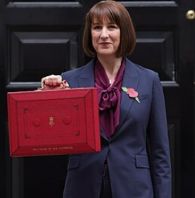
When the Autumn Budget was finally announced on Wednesday 26 November, there were no additional rises in National Insurance, and no change to VAT and Income Tax. Despite this, many small businesses still face challenges from a multitude of smaller changes, such as the freezes to threshold levels and the rising in National Living Wage - and with the overall tax burden for the country set to go up, many small businesses may be considering how this could play out with consumer confidence and their supply chain in the months ahead. In many respects, the Autumn Budget didn't deliver the direct tax rises that many small businesses feared, but it did create further costs and add a degree of complexity and uncertainty for longer-term planning.
Small business Budget viewpoints
Hannah Egerton of Edgie Eats Cake Shop and Café
As a small business owner running a bakery and café, I'd like to see the Autumn Budget focus on genuine support for small traders who are under significant cost pressures. We've faced ongoing challenges from rising ingredient prices, increasing energy costs, and a general slowdown in consumer spending. I would hope the Budget includes measures such as business rate relief extensions, targeted grants or tax incentives for local producers, and practical help with energy and supply costs.
Pinky Laing, Founder of The Remnant Revolution
Small businesses across the UK have had a tough time in the last year, yet the sector has the innovation and ideas that will power the economic growth we need. We need a Budget that prioritises small businesses and we also all need to continue to value and invest in sustainability.
Chris Powell, Head of Sales at Novuna Business Finance
Despite the challenges of 2025, our also data suggests many business owners are already working hard on plans to strengthen their enterprises for the year ahead. Whilst positive, our Q4 2025 data also reveals that 53% of UK small business owners say they also need to secure funding or finance in order to invest in growth plans for 2026. At Novuna Business Finance, we are working hard to support the small business community at a critical time - offering businesses in need of capital the ability to finance assets, an alternative that could potentially benefit their overall cash flow and ease pressure on other areas of their budget. Doing this with a flexible approach means that small businesses have the opportunity to better plan their growth for 2026 and beyond.
Looking forward: Resilience for 2026
Whilst Q4 finishes the year on a low-point for UK small business growth forecasts, our Q4 2025 research also suggests that small businesses are determined to move forward for the New Year. As they adapted during the pandemic and adjusted to market uncertainty during the Brexit period, once again the Novuna Business Finance data suggests the resilience of small business owners will again be at play as they start 2026.
Despite the current market challenges, 84% of small business owners say they are already prioritising new plans to try to make their enterprises stronger for 2026.
In terms of creating organic growth opportunities, 46% of business owners are exploring ways to increase income from new business - and one in four enterprises (24%) said they are looking to diversify their business by launching new products and services.
In addition to this, many enterprises are looking to streamline their business operations and processes to improve their overall financial strength. Nationally, 40% of small business owners are working on how they can reduce fixed costs for 2026, whilst 31% are working on steps to build up their financial reserves for the year ahead. Operationally, 17% of respondents are working on contingency plans to anticipate a further periods of market uncertainty.
The new research shows that, across UK regions and industry sectors, the vast majority of enterprises are already working on plans to strengthen their enterprises for 2026. These initiatives don't guarantee success or an upswing in growth outlook for next year, but they do demonstrate a determination from business owners to adapt and find ways to move forward, however challenging the market context may be in the final months of 2025.