



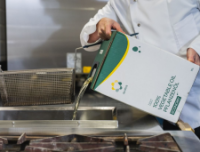
Guests never notice these things, but for anyone who has spent time in a catering kitchen, they are familiar markers of what happens once the performance is over.
Catering has always been built on precision. Timing is tight, margins are thinner than they look, and routines are sacred. For years, waste management lived outside that discipline, treated as a necessary but secondary task. Oil was drained when there was time. Bins were dealt with at the end of a shift. Improvisation filled the gaps where systems didn't exist.
That approach is becoming harder to justify. Over the past few years, sustainability has shifted from a marketing line to an operational concern. Customers ask questions that would have seemed intrusive a decade ago. Inspectors arrive with clearer expectations. Owners look at costs and realise that disorder behind the scenes eventually shows up on the balance sheet.
Used cooking oil reveals the problem clearly. Left unmanaged, it creates hazards that ripple through a kitchen. Floors become slippery. Storage areas smell off. Containers overflow at the worst possible moment. None of this improves service, and all of it adds stress to already demanding workdays.
Handled differently, oil becomes something else entirely. Scheduled collection, sealed containers, and predictable routines turn a recurring problem into a managed process. Companies such as Quatra have built their services around this exact pressure point, offering systems that collect used oil regularly and recycle it into other production cycles.
The appeal isn't philosophical. It's practical. Kitchens that rely on specialised partners report fewer interruptions and cleaner workspaces. Staff don't have to guess when collections will happen or where used cooking oil should go. The system holds, even during busy weeks when everything else feels stretched.
At that point, waste management stops being an add-on and starts behaving like infrastructure. It becomes part of the daily rhythm, as ordinary as prep lists and closing checks. There's no ceremony to it. It just works.
Predictability is often the hidden benefit. Regular collections reduce storage risks. Clear processes lower the chance of mistakes. Compliance becomes routine rather than reactive. For catering operations dealing with fluctuating demand, that stability matters more than lofty environmental claims.
Regulation plays its role as well. In recent months, scrutiny around waste disposal has increased, especially in urban areas where infrastructure is strained. Kitchens that have already adopted structured systems adapt faster. Those that haven't, scramble, often at a higher cost.
For smaller businesses, the idea of reworking waste practices can feel overwhelming. Yet the changes are often modest. Better containers. Clear labelling. A reliable partner. These adjustments rarely disrupt service, and they tend to pay for themselves through improved hygiene and fewer emergency fixes.
There is also a quieter shift taking place. Waste that once disappeared into drains or landfills now enters new cycles. Used cooking oil becomes renewable fuel. Organic waste becomes energy or compost. Catering businesses participate in this, whether they advertise it, simply by choosing systems that close the loop.
None of this alters the essence of catering. Food still comes first. Guests still judge what arrives at the table. But what happens afterwards is no longer invisible to the business itself. Kitchens that take waste seriously tend to run better in other ways, too.
Rethinking waste management in catering businesses is less about idealism and more about maturity. It reflects an industry recognising that efficiency doesn't stop when service ends. Responsibility, once pushed to the margins, has found a permanent place in the workflow.
