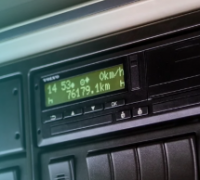
Driver card downloads, vehicle data, working hours and missing records all need attention, and the process becomes harder to manage when vehicles operate from different locations or drivers change regularly.
For businesses with vehicles that fall within tachograph rules, the challenge is less about collecting data for its own sake and more about knowing whether the records are complete and whether anything needs action. Manual checks can still work in a small operation, but they become increasingly difficult to control as the fleet grows.
First check which vehicles and journeys are in scope
Not every business van needs a tachograph, so compliance should start with the vehicles and journeys you actually operate.
For many goods vehicles above 3.5 tonnes, drivers' hours rules already apply. From 1 July 2026, the scope also changed for certain light goods vehicles above 2.5 tonnes used on international transport operations. That does not mean every van between 2.5 and 3.5 tonnes now requires a tachograph for domestic UK work.
This distinction matters for SMEs whose fleet has grown gradually. A business may have several vans doing local work, one heavier vehicle and another used for international deliveries. Treating the entire fleet as though every vehicle has identical obligations creates unnecessary admin, while assuming none of the lighter vehicles are covered can create a compliance gap.
The practical starting point is to identify which journeys fall within the rules and then build the record-keeping process around those operations.
Where manual tachograph checks start to become difficult
Once tachograph rules apply, the operator has recurring responsibilities. Vehicle unit data must be downloaded every 90 days, while driver card data must be downloaded every 28 days. Operators also need to analyse the information and keep records available for inspection.
The difficulty is rarely one individual download. It is keeping track of every driver, card, vehicle and deadline while normal business operations continue. A missing file might only become obvious when somebody starts preparing records for an internal review or inspection.
This is where tachograph analysis becomes more useful than simply storing files. If repeated completeness checks and drivers' hours reviews are becoming difficult to manage, operators can learn more about tachograph compliance software designed to flag gaps in the archive, identify driver infringements and keep digital tachograph files together in a secure environment.
For a growing business, that changes the task from manually checking whether everything has arrived to reviewing the exceptions that need attention.
What useful tachograph software should actually do
A software purchase should solve a specific administrative problem rather than add another dashboard to the business.
Good tachograph analysis software should make it easier to see whether required files are present and whether the recorded activity shows possible infringements. Reporting also matters because data that exists but takes too long to retrieve is less useful when someone needs to review it quickly.
Secure archiving is another practical requirement. Operators need access to drivers' hours records for the required retention period, so the system should make historical files straightforward to find rather than leaving them spread across local folders, email attachments or different depot systems.
Integration deserves attention as well. Tachograph software and remote download are related but not identical functions. When analysis software works alongside remote tachograph downloading, the business can reduce the need for physical access to cards and vehicles during routine data collection while keeping the analysis process separate and visible.
For SMEs, simplicity matters. A system used by one transport manager and a small operations team does not need extra complexity. Clear alerts, accessible reports and a clear view of missing files are often more useful than a long feature list nobody uses.
The 2026 rules make fleet scope worth reviewing again
The July 2026 change gives some businesses a fresh reason to check how their vans are being used.
Light goods vehicles above 2.5 tonnes can now fall within assimilated drivers' hours rules when they are used for international transport for hire or reward. There are exemptions, so the exact journey, vehicle weight and nature of the work still matter.
This is particularly relevant to SMEs that have expanded into European deliveries without thinking of themselves as transport businesses. A van that spends most of its time on domestic work may have different obligations when it is used for an international hire-or-reward journey.
The useful response is not to assume that every vehicle suddenly needs new equipment. It is to check the current rules against the fleet and identify which vehicles and journeys are genuinely in scope. Once that is clear, the business can decide whether its existing tachograph management process is still practical.
Digital records make compliance easier to review
Manual processes often survive because they worked when the fleet was smaller. The problem appears when more drivers, vehicles and locations are added without changing the underlying admin.
Tachograph analysis remains part of the operator's wider compliance process, and software does not remove that responsibility. What it can do is make missing files, incomplete archives and recorded issues easier to see so they can be investigated sooner.
For small businesses, the value is not simply replacing paperwork with software. It is giving the person responsible for the fleet a clearer view of what has been collected, what still needs attention and what the records are showing.
As a multi-van operation grows, that clearer view can be more useful than adding another manual check to an already busy working week.