



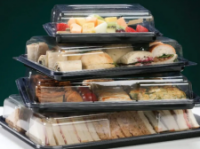
That approach is changing. In the food and catering industries in particular, packaging now plays a bigger role in how customers judge a brand, particularly as public awareness grows around waste, recycling and the wider environmental impact of day-to-day consumption. For SMEs trying to compete against larger businesses, packaging has become a visible part of the customer experience, not just something functional that sits in the background.
In practical terms, this means the packaging choices can influence trust, reviews, repeat business and how customers feel about your business and brand from their first interaction.
Why consumers care more about packaging than they used to
Over the past few years, consumer expectations have shifted. People have become more informed about how packaging contributes to landfill, pollution and carbon emissions throughout the supply chain. At the same time, many customers are becoming less tolerant of excessive or unnecessary packaging, particularly where it feels avoidable.
For SMEs, this creates a different level of scrutiny. It is no longer unusual for customers to comment on packaging in reviews, mention it directly on social media or factor it into purchasing decisions alongside price and product quality. In some sectors, packaging can shape perception before a customer even tries the product.
Packaging is now part of the product experience
What SMEs are seeing more often is that packaging does more than protect goods in storage or transit. It affects how customers feel when they receive the product, particularly when unboxing and presentation have become part of how people judge quality.
This is true across retail and ecommerce, but it becomes even more noticeable when the packaging is used in public. Drinks cups, takeaway containers and food wraps are handled, carried, photographed and thrown away in full view. That visibility puts more pressure on small food brands, cafés, restaurants and takeaway businesses to think carefully about the materials they use.
SMEs that treat it as part of the customer journey, and not just a practical way to ship or serve produce, are often better placed to meet expectations than those that view it as a purely operational cost.
Why food packaging is under particular scrutiny
Food businesses often feel this shift sooner than other sectors. That is partly because food packaging is frequently single-use, but also because customers associate it with hygiene, product quality, safety and care.
There is a clear expectation that food packaging should be:
● Robust enough to hold hot, cold, wet or greasy items without leaking.
● Secure enough for delivery and handling.
● Hygienic and fit for purpose.
● Easy for customers to dispose of properly.
At the same time, customers want to see less plastic, fewer unnecessary layers and where realistic, more recyclable or compostable options.
This combination creates a real challenge for SMEs. Food packaging still has to function reliably every day. It needs to survive delivery journeys, preserve temperature and freshness and protect the product so it reaches the customer in the condition they expect. However, these days, the packaging industry is responding to consumer demand, with a wide range of options that reduce reliance on traditional plastics while still meeting those practical performance requirements.
Eco-friendly does not have to mean less practical
One of the main concerns for food businesses is that environmentally responsible packaging comes at the expense of being weaker, less durable and unreliable compared to traditional materials, especially where moisture or heat is involved.
In reality, many modern packaging alternatives have been developed with commercial use in mind. Suppliers now offer packaging materials and designs that focus on function first, while moving away from materials that create unnecessary waste.
For SMEs, that matters because packaging is not an abstract sustainability decision. It affects customer satisfaction in a very immediate way. If packaging leaks, collapses or fails during delivery, it becomes a customer service issue and a financial cost, not just a branding issue.
This is why many food brands now look for packaging that balances durability with better material choices. Businesses can source practical options from specialist suppliers such as iKrafts without having to compromise on performance and usability.
Consumer trust and brand identity are increasingly linked to packaging decisions
For smaller businesses, reputation can change quickly. A handful of poor reviews, a few negative comments online or a recurring complaint about wasteful packaging will undermine customer confidence.
Equally, businesses that appear thoughtful and consistent in their approach often benefit from stronger customer loyalty. Packaging is part of that impression. Customers may not expect a business to be perfect, but they do respond to clear intent and visible effort, especially when it aligns with their own preferences.
The most effective approach tends to be honest and straightforward. If your business is switching materials, reducing unnecessary components or improving disposal messaging, say so. This kind of messaging can often build trust in the brand, and open up conversations and awareness on marketing channels. Many customers are willing to support that process, but they want clarity about what they are buying and how to handle the packaging once they are finished with it.
What SMEs can do without overcomplicating the process
Making changes to packaging does not need to be disruptive, but it does work better when approached systematically. For many SMEs, a useful starting point is reviewing existing packaging and asking a few practical questions:
● Are there any parts of the packaging that customers do not need?
● Are you using more material than necessary for the product size?
● Do customers understand how to dispose of it?
● Does the packaging align with how you position your brand?
● Will it hold up under delivery conditions without additional layers?
Some businesses switch materials gradually rather than changing everything at once. Others focus first on the highest-volume items, where small improvements can reduce waste and cost over time.
In the food sector, many SMEs also explore packaging options that better match customer expectations around recyclability and compostability. This has helped drive growing demand for eco-friendly food packaging that is designed for everyday use in busy kitchens and delivery settings, rather than occasional or low-volume scenarios.
Packaging is becoming a commercial issue, not just an environmental one
Sustainability is often presented as a values-led decision, but for SMEs it also has clear commercial implications. Packaging shapes how customers judge your brand, what they say about it and whether they come back. When reviewing packaging choices, take a considered approach, because here in 2026, customers are paying closer attention to your packaging than they did before.
